Case study · LED virtual production
Riyadh Air Safety film.
We produced 14 digital environments in 22 days with a team of six for the LED backgrounds used in Riyadh Air’s safety film. The work combined 3D, location photography, matte painting and AI-assisted techniques. Our role was the imagery on the LED screens; other teams handled the studio shoot and final post-production.
- Client
- Riyadh Air
- Our role
- Background environments for the LED volume
- Year
- 2025
- Team
- 6 people
- Timeline
- 22 days
- Delivered
- 14 scenes · 11520×2304 · HAP
The brief
The world outside the cabin.
Riyadh Air's official safety film was shot on an LED volume: a stage wrapped in LED walls and ceiling panels that show the world around the actors, live, in camera. Every scene needed its own world behind it — Riyadh's skyline, the historic district of Diriyah, the cliffs of the Edge of the World, open sky.
Our job was those worlds. We designed and built the background environments that played on the LED wall. The studio shoot and the final post-production were handled by other teams.

Swipe to see the full panorama →
The problem
The content didn't exist.
Every scene had to fill a wall at 11520×2304 pixels, delivered in the HAP codec for real-time playback. For most of the locations in Riyadh, there was no footage or imagery anywhere near that resolution — online or in stock libraries.
So every frame had to be made: modelled, photographed, painted or generated. Fourteen of them, by a team of six, in 22 days.
The approach
3D first. Then whatever holds up in camera.
We started every scene in 3D. If a scene hadn't reached the quality we needed within two or three days, we switched routes rather than lose the schedule:
- 3D, start to finishThe boulevard. For the city itself, we sourced a 3D model of the whole of Riyadh and rebuilt it for camera.
- Location photographyOur Diriyah model wasn't holding up. A photographer shot the alleys on location, and we built the scene over those plates.
- Stock, extendedWhere existing footage came close, we used it as a base and extended skies and edges to fill the full wall.
- AI-generatedThe aerial view over Diriyah, used as a transition, was generated entirely with AI.


Diriyah
From a location plate to an emergency exit.
We started from a single daylight photo of a Diriyah alley. It filled only the centre of the LED wall. We turned it into night, extended the walls across the full width of the wall and added the lanterns in 3D.
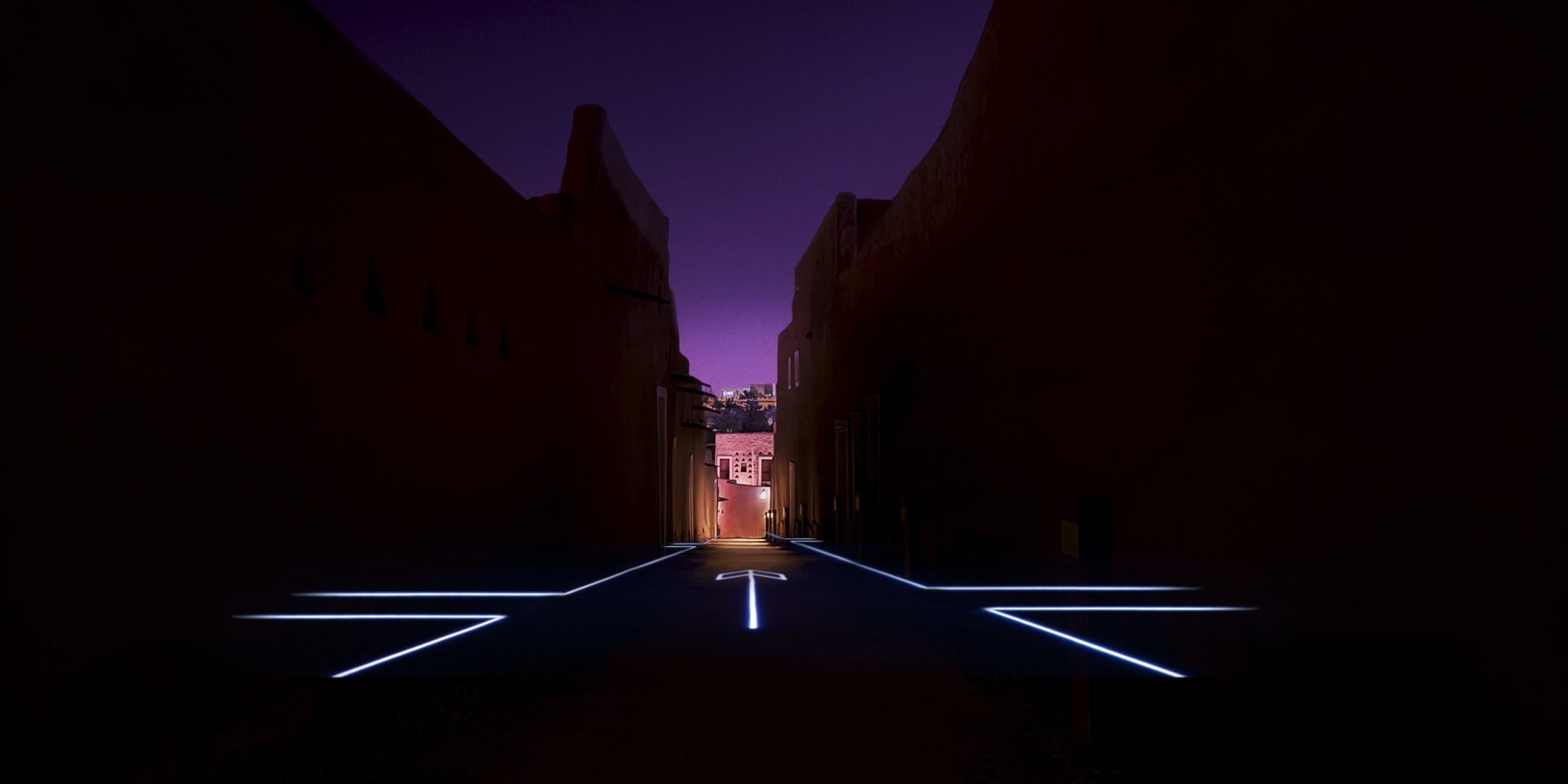
For the emergency-exit moment we then turned the lights down, added the guidance lights on the ground and animated their flicker for the moment the cabin goes dark.
Drag across the images to compare.


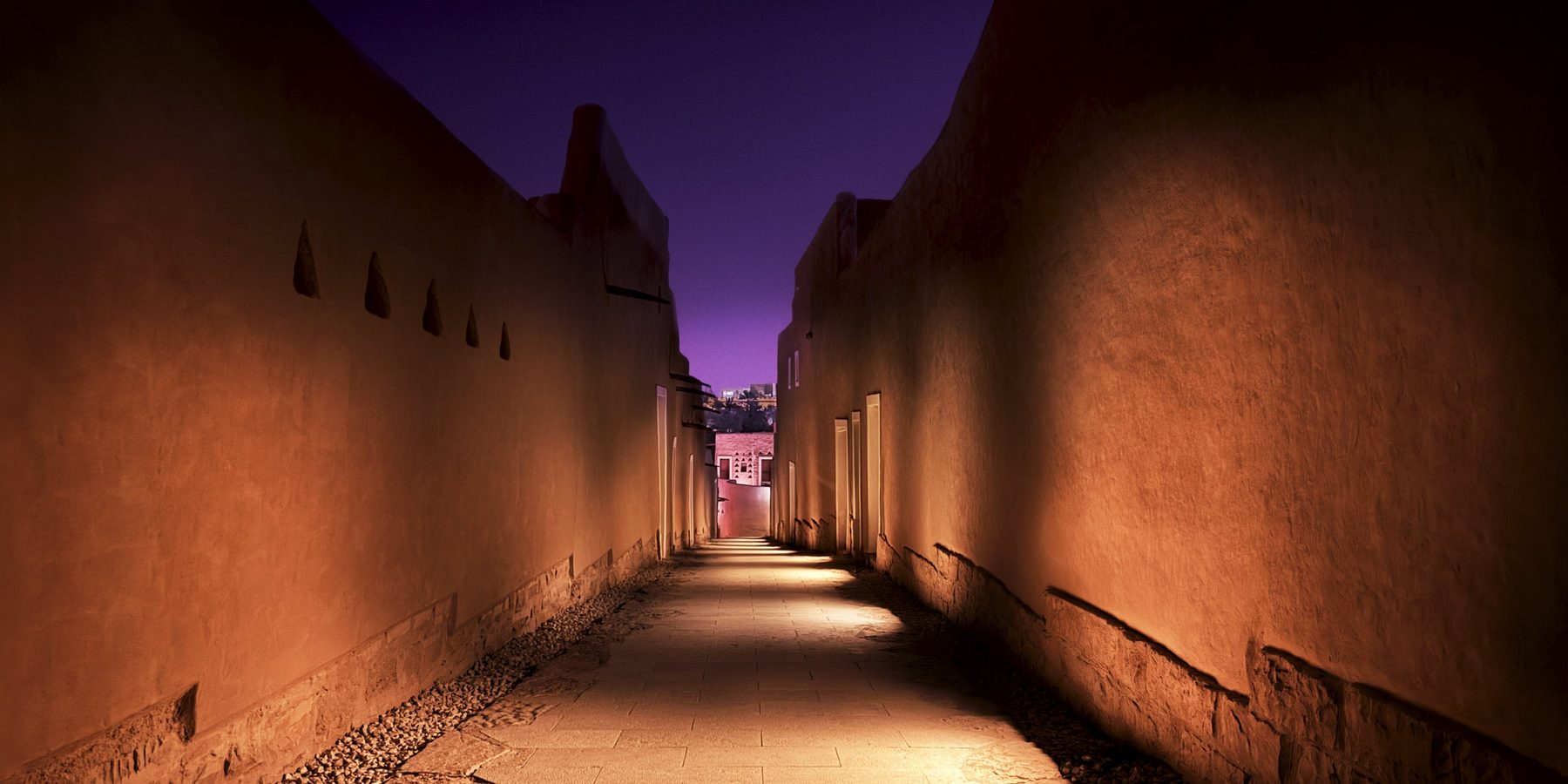
 Night environment
Emergency-exit scene
What we learned
Aviation has its own visual rules.
No aircraft split in three. We rendered aircraft shots, but the LED wall was divided into three panels. A plane broken across the seams reads as unsafe — so those scenes were cut.
No dark clouds. At all. Even a small shadow inside a cloud could suggest a storm, and every one was flagged. We ended up building thin, weightless clouds and reworking existing footage until every sky felt calm.


On set
In camera.
The environments on the volume during the shoot — playing across the curved wall, the ceiling panels and the reflective floor.


The film
Watch the final safety film.
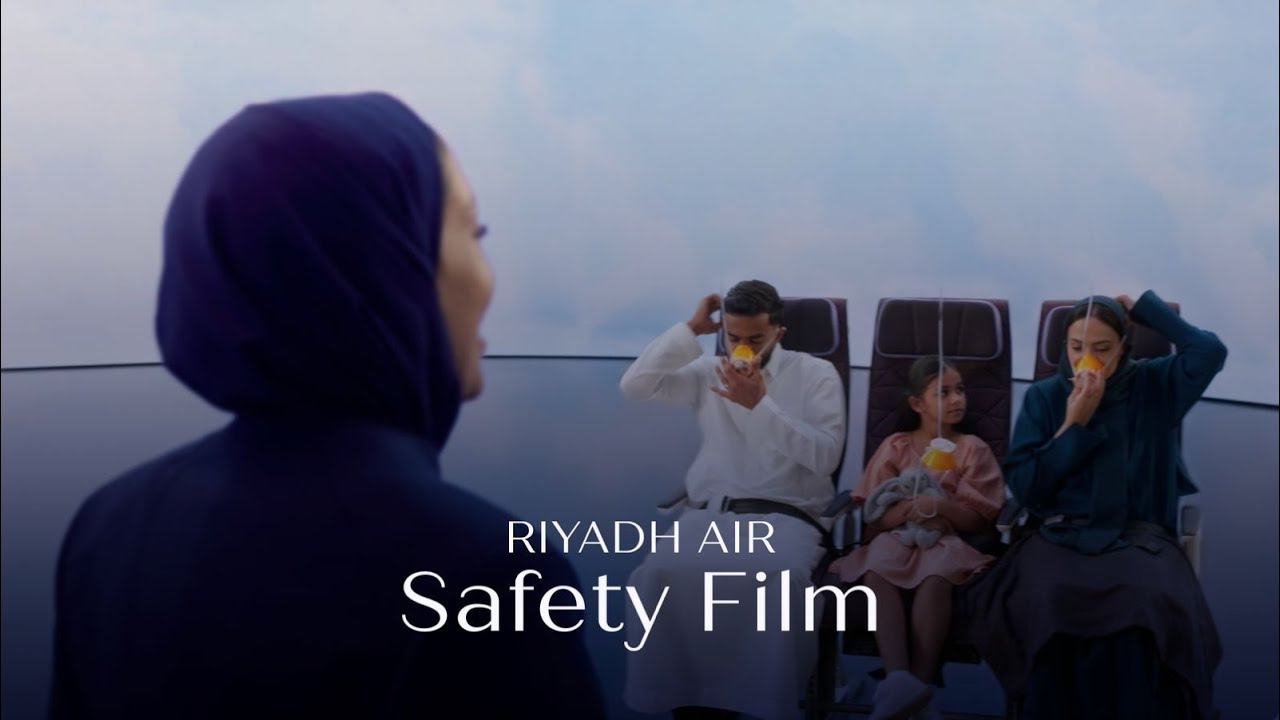
Plays from Riyadh Air's YouTube channel.
Credits
Who did what.
- Client
- Riyadh Air
- LED-volume environments
- Nongravital
- Techniques
- 3D environments, location photography, matte painting, sky extension, compositing, AI-assisted workflows
- Studio shoot & post-production
- Partner teams
LED shoot coming up?